
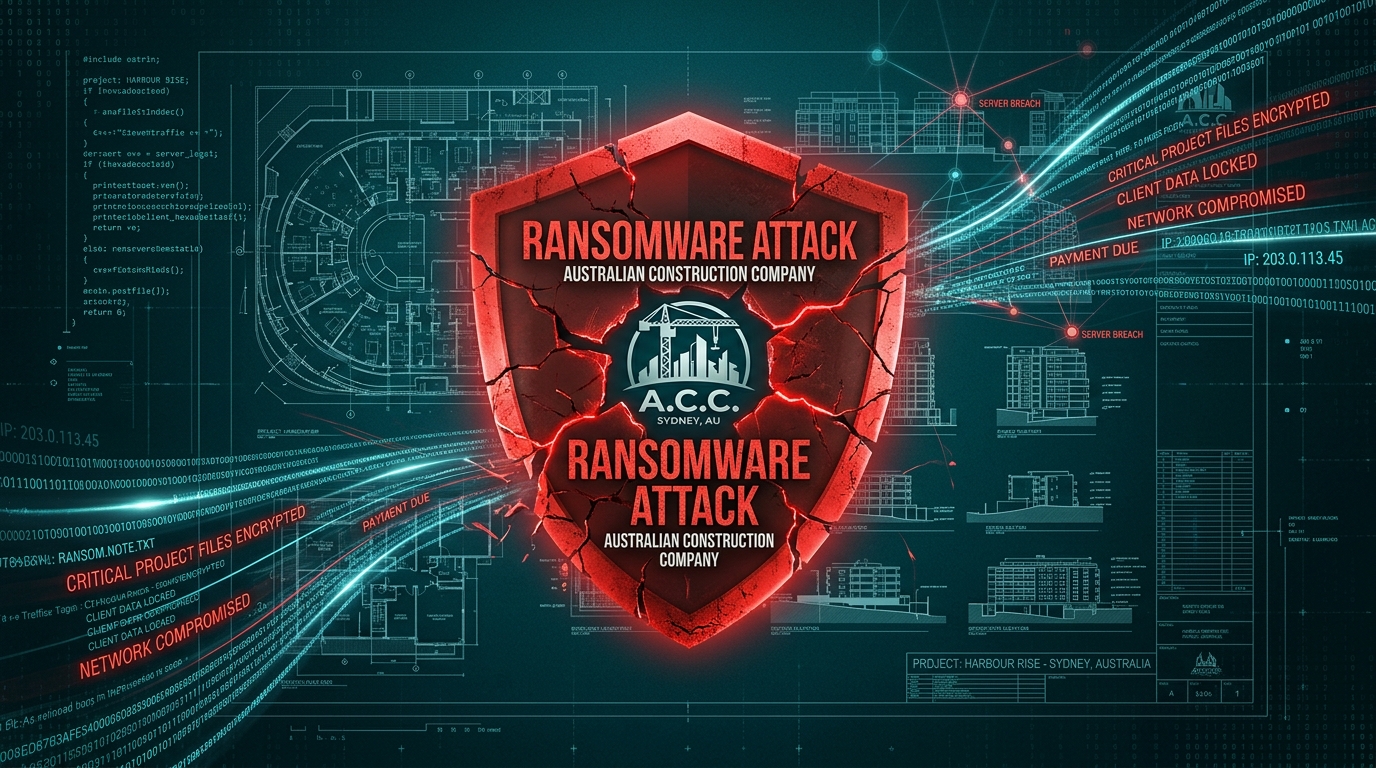
In April 2026, Champion Homes, a Sydney-based home builder, was targeted by the DragonForce ransomware operation. The attackers listed Champion Homes on their dark web leak site on 21 April 2026. When the company did not meet their demands, DragonForce published 44GB of stolen data publicly. That data included tender documents, quotes, and payroll information. Champion Homes has since confirmed the incident, reported it to the Office of the Australian Information Commissioner (OAIC) and the Australian Cyber Security Centre (ACSC), and stated that the incident is now contained with limited operational impact.
The Champion Homes data breach is a significant incident for the Australian construction industry and a clear warning for businesses across all sectors. When ransomware gangs publish stolen data on the dark web, it cannot be taken back. The exposure is permanent, and the consequences for affected individuals and the business itself can be serious and long-lasting.
What Happened in the Champion Homes Data Breach
Champion Homes, a Sydney-based residential home builder, was targeted by the DragonForce ransomware operation in April 2026. DragonForce is a ransomware-as-a-service operation that has been responsible for attacks on organisations across multiple industries and countries. The group operates a dark web leak site where they list victim organisations and publish stolen data when ransom demands are not met.
DragonForce listed Champion Homes on their leak site on 21 April 2026. This listing is a standard tactic used by modern ransomware gangs. By publicly naming a victim, the attackers apply additional pressure to pay the ransom before their data is released. In the case of Champion Homes, the full 44GB dataset was subsequently published on the dark web.
The published data included:
- Tender documents
- Quotes and pricing information
- Payroll data
Each of these categories carries significant sensitivity. Tender documents and quotes contain commercially confidential information that could be exploited by competitors. Payroll data is particularly sensitive because it includes personal information about employees, such as names, salaries, bank account details, and tax file numbers. The publication of payroll data on the dark web exposes affected employees to identity theft, financial fraud, and targeted phishing attacks.
Champion Homes confirmed the breach and reported it to both the OAIC and the ACSC. The company stated that the incident is contained and has had limited operational impact on the business. While this is a positive signal from an operational continuity perspective, the data that has already been published cannot be retracted. The harm to affected individuals is ongoing regardless of the business’s recovery status.
How Champion Homes Responded
Champion Homes took the appropriate steps of reporting the incident to the OAIC and the ACSC. These are the required regulatory notifications under the Notifiable Data Breaches scheme for qualifying organisations. The company has also stated publicly that the incident is contained with limited operational impact.
Containing a ransomware incident means the attackers no longer have access to the business’s systems and the spread of the malware has been stopped. This is a critical step in recovery. However, containment of the attack does not undo the data theft that occurred prior to the ransomware deployment. With modern ransomware operations like DragonForce, data exfiltration typically precedes the encryption event. The attackers had already copied the data before the business was aware of the breach.
The public acknowledgment and regulatory reporting by Champion Homes is consistent with responsible breach response. Businesses that attempt to conceal breaches or delay notifications face far greater regulatory and reputational consequences than those that act transparently and in accordance with their legal obligations.
Champion Homes affected employees and business partners who had data involved in this breach should expect to receive formal notification, as required under the Notifiable Data Breaches scheme.
What Affected Champion Homes Employees and Partners Should Do
If you are an employee of Champion Homes or a business partner whose data may have been included in the breach, the following steps are important and should be taken promptly.
Protect Your Financial Accounts
Payroll data typically includes bank account details. Contact your bank or financial institution and request a review of your accounts for any unauthorised transactions or changes. Ask your bank about placing additional verification requirements on your account to prevent unauthorised access or transfers.
Monitor for Identity Theft
The combination of personal details, salary information, and potentially tax file numbers in payroll records creates a high risk of identity theft. Contact Australian credit reporting bodies such as Equifax, Experian, or illion to place an alert on your credit file. This adds a layer of protection against fraudulent credit applications being made in your name.
Be Alert to Phishing and Social Engineering
When personal data is published on the dark web, cybercriminals use it to craft targeted phishing attacks. These may come via email, phone, or SMS and often appear to come from trusted sources like your employer, the Australian Tax Office, or your bank. Do not click links in unsolicited communications and do not provide personal information to callers you cannot independently verify.
Contact the ATO if Tax File Numbers Were Involved
If you believe your tax file number may have been in the payroll data, contact the Australian Taxation Office. They can flag your account and help you monitor for fraudulent tax lodgements or refund claims made in your name.
Seek Support from IDCARE
IDCARE is Australia’s national identity and cyber support service. They provide free assistance to individuals affected by data breaches and can help you work through the steps to protect your identity and respond to any misuse of your personal information. Visit idcare.org or call 1800 595 160.
Review Business Partner Exposure
If you are a business partner of Champion Homes and your tender documents or quotes were in the dataset, consider whether the exposure of that commercially sensitive information creates any contractual or competitive risks for your organisation. Review your own data sharing arrangements and consider seeking legal advice if the exposure of that information is likely to cause material harm.
Why the Champion Homes Breach Matters to Australian Businesses
The Champion Homes data breach highlights several issues that are directly relevant to Australian businesses in construction and beyond.
Dark Web Publication Is Permanent
Once data is published on a dark web leak site, it cannot be retrieved or deleted. The 44GB of data from Champion Homes is now accessible to any criminal or malicious actor who chooses to download it. This is fundamentally different from a breach where data is stolen but not published. The harm to individuals and the business is ongoing and cannot be reversed through any post-incident response.
The Construction Industry Is a Target
The construction industry handles large volumes of commercially sensitive data including tender documents, subcontractor agreements, and financial records. It also maintains detailed personal information about employees, particularly in payroll systems. These characteristics make construction businesses attractive targets for ransomware operations. The combination of sensitive commercial and personal data creates multiple avenues for extortion and exploitation.
Ransomware Gangs Operate Professionally
DragonForce and similar operations are not opportunistic criminals. They are organised criminal enterprises with defined processes, technical capabilities, and business models. Their approach of listing victims, applying deadline pressure, and publishing data when payments are not made is designed to maximise the likelihood of payment. Understanding this helps businesses appreciate why basic security hygiene is not sufficient protection against sophisticated ransomware operations.
Supply Chain and Partner Risk Is Real
The Champion Homes breach exposed data belonging not just to the company but also to its employees, subcontractors, and potentially clients. When a business holds data on behalf of partners or clients, a breach of its systems creates downstream harm for those parties. Businesses should consider the data they hold on behalf of others and ensure their security controls are proportionate to that responsibility.
Regulatory Obligations Are Non-Negotiable
Champion Homes fulfilled its legal obligation by reporting the breach to the OAIC and the ACSC. Australian businesses need to understand that these obligations apply to them and that failure to report a qualifying breach can result in significant regulatory action. The Privacy Act imposes obligations on how personal information is collected, stored, and protected. A breach of this kind invites regulatory scrutiny of the business’s security practices.
General Cybersecurity Advice for Australian Businesses
The Champion Homes breach, like the Gregory Jewellers breach before it, underscores the importance of a proactive and comprehensive approach to cybersecurity. No security measure eliminates risk entirely, but the following steps significantly reduce the likelihood and impact of a ransomware attack.
Establish Strong Access Controls
Restrict access to sensitive data to only those employees who need it to perform their role. Excessive access privileges are a common factor in large-scale data breaches. When an attacker gains access to one account, broad access privileges allow them to move through systems and access far more data than they should be able to reach.
Enable Multi-Factor Authentication
Multi-factor authentication (MFA) is one of the most effective single controls available to organisations of any size. It makes it significantly harder for attackers to use stolen or compromised credentials to access your systems. MFA should be enabled on all accounts, with priority given to email, remote access, cloud services, and administrative accounts.
Implement Endpoint Detection and Response
Endpoint detection and response (EDR) tools monitor activity across workstations and servers and can identify suspicious behaviour associated with ransomware attacks before they reach their final stage. Early detection of an intrusion dramatically reduces the damage an attacker can cause.
Maintain Immutable, Tested Backups
A reliable backup strategy is the most important recovery control for ransomware. Backups must be stored in a location that ransomware cannot access and encrypt, which means offline or immutable cloud storage. Regular testing of backup restoration is essential. A backup that has never been tested is a backup you cannot rely on.
Review and Test Your Incident Response Plan
Every business should have a documented incident response plan that includes who to call, what systems to isolate, how to communicate with staff and customers, and what regulatory notifications are required. Practice the plan through tabletop exercises so that when an incident occurs, your team knows exactly what to do.
Engage Professional Cybersecurity Support
Protecting a business from sophisticated ransomware operations requires expertise that most organisations cannot maintain in-house. Engaging a provider of managed cybersecurity services gives your business access to continuous monitoring, threat detection, and expert incident response capability. This is particularly important for construction businesses and professional services firms that hold significant volumes of sensitive data.
Conduct Regular Security Assessments
A security assessment identifies the vulnerabilities in your environment before an attacker does. Regular assessments, combined with a structured remediation plan, allow you to address weaknesses methodically and prioritise your security investment based on actual risk.
What Should You Do Now?
The Champion Homes data breach is another reminder that ransomware is an active and serious threat to Australian businesses. The construction industry, like every sector that holds sensitive data, must treat cybersecurity as a business-critical function rather than an IT afterthought.
If your business has not recently reviewed its cybersecurity posture, now is the time. Otto IT works with Australian businesses to identify security gaps, implement appropriate controls, and develop the capability to detect and respond to incidents before they become breaches.
You can get in touch with our team to start the conversation, or book a consultation directly with one of our specialists. A proactive approach to cybersecurity is always less costly than recovering from a breach.
Frequently Asked Questions
What is the Champion Homes data breach?
The Champion Homes data breach refers to a ransomware attack carried out by the DragonForce ransomware operation against Champion Homes, a Sydney-based home builder. DragonForce listed Champion Homes on their dark web leak site on 21 April 2026 and subsequently published 44GB of stolen data, including tender documents, quotes, and payroll data. Champion Homes reported the incident to the OAIC and the ACSC.
Who is DragonForce?
DragonForce is a ransomware-as-a-service criminal operation responsible for attacks on organisations across multiple industries and countries. They operate a dark web leak site where they publish stolen data from organisations that do not pay their ransom demands.
What data was published in the Champion Homes breach?
DragonForce published 44GB of data stolen from Champion Homes. The published dataset included tender documents, quotes and pricing information, and payroll data.
Is the Champion Homes breach contained?
Champion Homes has publicly stated that the incident is contained with limited operational impact on the business. However, the data that was published on the dark web before containment cannot be recovered or deleted. The exposure of that data is permanent.
What should Champion Homes employees do if their data was in the breach?
Employees should contact their bank to review their accounts, place a credit alert with Australian credit reporting bodies, contact the ATO if they believe their tax file number was involved, remain alert to phishing attempts, and seek support from IDCARE at idcare.org.
Why was Champion Homes targeted by ransomware?
Construction businesses hold commercially sensitive information such as tender documents and financial records, as well as significant personal data in their payroll systems. This combination makes them attractive targets for ransomware operations that seek to steal and monetise valuable data.
How can my business avoid a breach like the one at Champion Homes?
Key measures include implementing multi-factor authentication, restricting access to sensitive data, deploying endpoint detection and response tools, maintaining tested offline backups, developing an incident response plan, and engaging a provider of managed cybersecurity services for ongoing monitoring and support.
What is the Notifiable Data Breaches scheme?
The Notifiable Data Breaches scheme is a requirement under the Australian Privacy Act that obligates organisations with a turnover above $3 million to notify the OAIC and affected individuals when a data breach is likely to result in serious harm. Champion Homes fulfilled this obligation by reporting the breach to the OAIC and the ACSC.
managed it support articles
Related Blog Articles
Discover more insights to optimise your business with the latest IT trends and best practices. Stay ahead of the curve by learning how to leverage cutting-edge technology for success. Explore expert advice and valuable guidance to navigate the evolving world of IT solutions