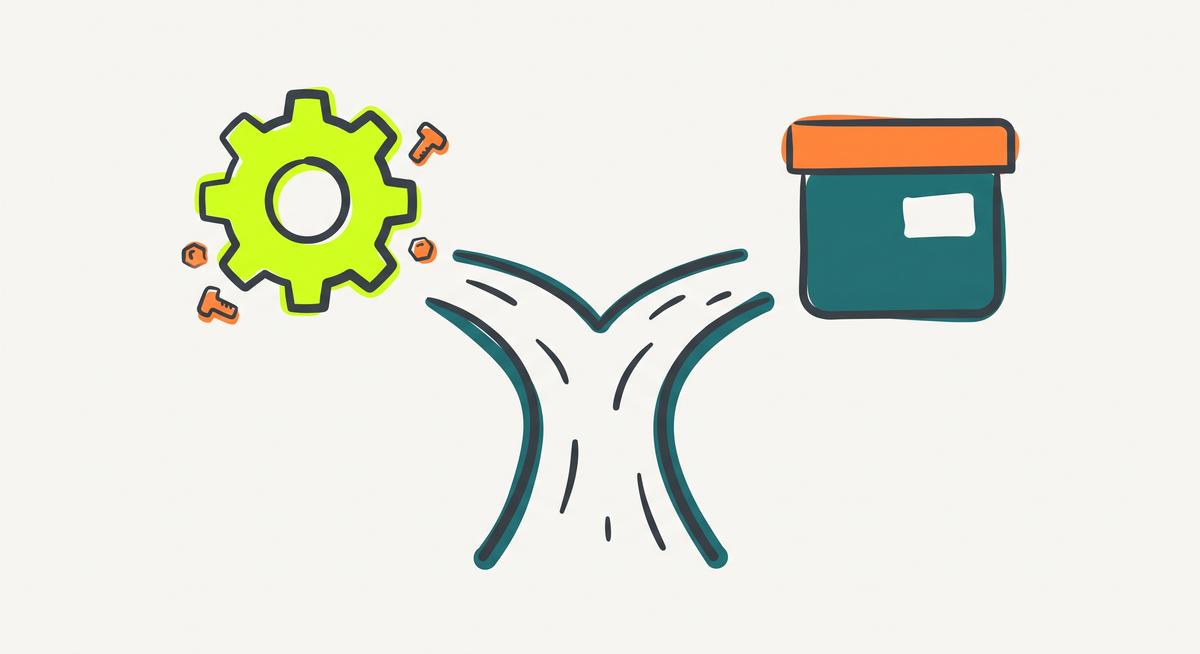
Every business that gets serious about AI eventually hits the same fork in the road. Build something custom that fits exactly, or buy an existing product and adapt your process to it. Both paths work. Picking the wrong one for your situation is where time and budget disappear.
This decision used to be simpler because building custom software was expensive and slow, which pushed most businesses toward off-the-shelf by default. AI coding tools have changed that equation. Custom is now faster and cheaper to start than it used to be, which means more businesses are seriously weighing it as an option rather than dismissing it immediately.
When Off-the-Shelf Is the Right Call
Buying an existing product makes sense when your need is common enough that someone has already solved it well. Accounting, payroll, CRM, and standard helpdesk ticketing are mature categories with well-tested products. Building a custom version of any of these rarely makes commercial sense, because you would be paying to reinvent something that already works, and you would own all the ongoing maintenance that the vendor currently handles for you.
Off-the-shelf also wins when you need vendor accountability. If a commercial product fails, there is a support contract, a service level agreement, and a company whose job it is to fix it. That accountability has real value, particularly for anything touching compliance, finance, or client data at scale.
When Custom Genuinely Makes Sense
Custom tools earn their place when your process is genuinely specific to your business and no existing product fits it well. A unique internal workflow, a very particular way you need data to move between two systems, or a process so specific to your industry that commercial products treat it as an afterthought are all good candidates.
AI coding tools have also made a middle ground realistic: internal utilities that automate a specific repetitive task, rather than full systems of record. A tool that pulls data from one place and formats it for another, or a dashboard that answers one specific recurring question, can now be built quickly and cheaply, and the lower cost of building it changes the economics of whether it is worth doing at all.
The Questions That Actually Decide It
Rather than defaulting to either option, work through these questions honestly.
- Does an existing product already solve this well, or would you be customising around its limitations constantly?
- Does this tool need to hold sensitive client or financial data, where vendor accountability and compliance certifications matter?
- Who inside the business will support this long term if it is built custom, and what happens when that person leaves?
- Is the process genuinely unique to your business, or does it just feel unique because nobody has looked for an existing solution?
- What is the real cost of ongoing maintenance for a custom tool, not just the cost of building it?
That last point is where most custom decisions go wrong. Building is cheap now. Maintaining, securing, and supporting a custom tool over several years is not, and that cost rarely gets weighed properly against a subscription fee at the point of decision.
A Practical Middle Path
Many businesses do not need a single answer across the board. Core systems of record, the ones holding client data, financials, and compliance-relevant information, are usually better bought. Small, specific internal utilities that save time on a narrow repetitive task are often good custom candidates, provided they are brought under the same governance as any other business system once they prove useful.
How Otto IT Helps You Decide
Our Virtual CIO service works through exactly this decision with clients before any money gets spent, and our automation and AI consulting team can scope a custom build properly if that turns out to be the right call. If you are weighing up a build-or-buy decision right now, talk to us before committing budget either way.
Frequently Asked Questions
Is custom-built software always riskier than buying a product?
Not always, but it does shift more of the ongoing responsibility onto your business. That trade-off can be worth it for a genuinely unique process, and not worth it for a solved problem like payroll or accounting.
How do we estimate the real cost of a custom tool?
Add the build cost to several years of expected maintenance, security review, and support time, then compare that total to a few years of subscription fees for an equivalent product. The comparison looks very different once maintenance is included properly.
Can we start with off-the-shelf and move to custom later?
Yes, and this is often the lowest-risk path. Using a commercial product while your process matures, then building custom once you know exactly what you need, avoids committing early to a solution built around assumptions that later turn out wrong.
managed it support articles
Related Blog Articles
Discover more insights to optimise your business with the latest IT trends and best practices. Stay ahead of the curve by learning how to leverage cutting-edge technology for success. Explore expert advice and valuable guidance to navigate the evolving world of IT solutions