

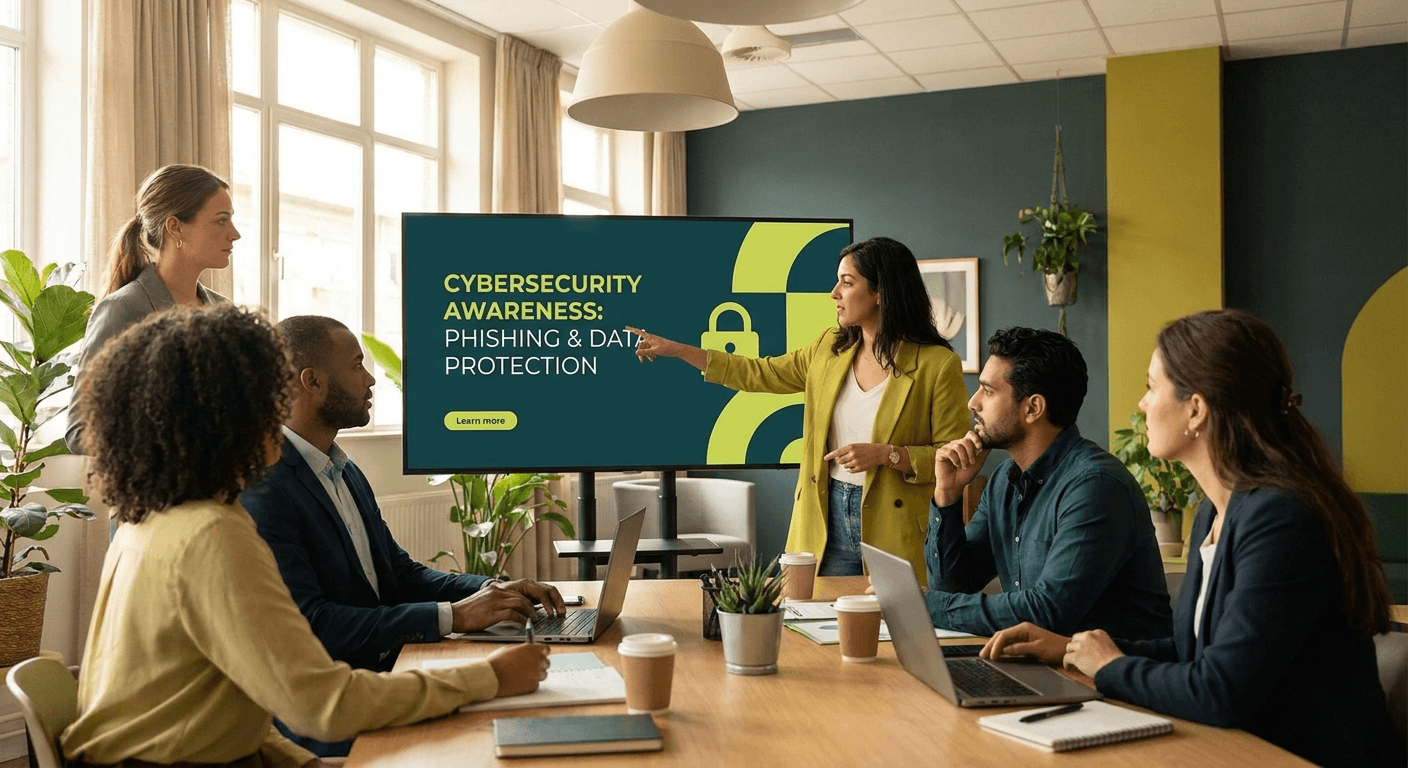
Building a cybersecurity culture in your workplace is one of the most effective things you can do to protect your business. Not because technology does not matter, but because technology alone will never be enough. Most successful cyber attacks are not the result of a firewall failing. They happen because a real person, under pressure, in a distracted moment, clicked something they should not have. This post covers why that happens, what a genuine cybersecurity culture looks like, and how to build one without turning your team into a frightened, rule-following machine.
This is Week 6 of our Cybersecurity for Business series. If you missed Week 1, start with What is a Cyber Attack? A Plain-English Guide for Australian Businesses.
Why Most Cyber Attacks Succeed Because of People
There is a reason attackers keep targeting inboxes rather than infrastructure. People are the path of least resistance. A well-configured firewall takes real effort to break through. A stressed employee who thinks they are helping their CEO action an urgent invoice transfer is a much easier target.
This is not a criticism of your team. It is a reflection of how sophisticated modern social engineering has become. Phishing emails now look near-identical to legitimate communications. Business email compromise attacks often involve weeks of reconnaissance before a single malicious message is sent. The attacks are designed to succeed, and they are designed around human psychology, not technical vulnerabilities.
Acknowledging this honestly is the first step toward building something better. You cannot train your way out of a people problem if the training treats people as the problem.
What a Good Cybersecurity Culture Actually Looks Like
A good cybersecurity culture is not an annual training session that everyone sits through and immediately forgets. It is not a compliance checkbox. It is not posters in the kitchen reminding people to use strong passwords.
A genuine cybersecurity culture looks like this:
- People feel comfortable reporting a mistake without fear of punishment.
- Security feels like a shared responsibility, not an IT department burden.
- Leaders model the behaviours they expect from everyone else.
- Awareness is woven into onboarding, team meetings, and everyday conversation.
- Policies are written in plain English that anyone can actually follow.
The difference between a compliance culture and a security culture is trust. In a compliance culture, people follow rules because they have to. In a security culture, people make good decisions because they understand why it matters and feel safe doing the right thing.
The Psychology Behind Phishing: It Is Not Stupidity
Here is something worth saying clearly. Clicking a phishing link is not a sign of low intelligence. It is a sign of being human in a busy, pressured environment.
Attackers exploit predictable psychological patterns. They create urgency, so you act before you think. They use authority, impersonating a boss or a bank, so your instinct is to comply rather than question. They manufacture familiarity, using your name, your company’s branding, or a colleague’s email address, so your brain categorises the message as safe before you have consciously evaluated it.
Your finance manager who processes 80 invoices a day is not careless. She is running a pattern-matching system that has been deliberately manipulated by someone who studied how she works. Framing security awareness training around blame and embarrassment does not fix this. It just means people are less likely to report when it happens to them.
Empathy is not soft. It is strategically correct. If your team is afraid to admit a mistake, you will find out about it later, when the damage is already done.
Practical Ways to Build Awareness Without Fear or Blame
Run Simulations the Right Way
Phishing simulations are a legitimate awareness tool, but they can backfire badly if implemented poorly. The goal of a simulation is to educate, not to catch people out. When someone clicks the test link, the response should be a gentle, informative explanation of what happened and why, not a public shaming or a disciplinary note on their file.
Done well, simulations help people recognise what a real attack feels like in a safe environment. Done poorly, they create anxiety and erode trust in your IT team.
Make It Relevant to People’s Real Lives
One of the most effective things you can do is connect cybersecurity to people’s personal lives. Most of your team uses the same email habits at home that they use at work. When they understand that strong password hygiene protects their personal banking and their kids’ devices, not just company data, the motivation to care shifts from obligation to genuine interest.
Run a five-minute session on how to spot a scam text message. Share a real-world story about what happened to a local business after a breach. Make it human, not theoretical.
Use Positive Reinforcement
When someone correctly identifies and reports a phishing email, acknowledge it. A simple thank-you in a team meeting goes a long way. People repeat behaviours that are noticed and appreciated. Building a culture where good security decisions are celebrated changes the dynamic from policing to participation.
Leadership’s Role: If the CEO Ignores the Rules, Nobody Follows Them
This one is non-negotiable. Culture is set from the top, and cybersecurity is no different. If your senior leaders use personal devices for work without MFA, share passwords with assistants, or skip security training because they are too busy, that behaviour becomes the de facto standard for everyone below them.
Leaders do not need to become security experts. They need to visibly comply with the same policies they ask their teams to follow. They need to talk about security as a business priority, not an IT inconvenience. And when a breach happens, they need to model the culture of transparency and learning rather than blame.
Executive buy-in is not a nice-to-have. It is the foundation that everything else sits on.
Simple Policies That Actually Stick
Security policies fail when they are too long, too technical, or too disconnected from how people actually work. Here are the basics that every Australian business should have in place, written in plain language:
Passwords and Access
- Use a password manager. Do not reuse passwords across accounts.
- Enable multi-factor authentication on every system that supports it.
- Never share login credentials with a colleague, even temporarily.
Devices and Data
- Do not use personal devices for work unless they are enrolled in your company’s device management system.
- Lock your screen when you leave your desk, even in the office.
- Do not transfer company data to personal storage or personal email accounts.
Reporting Without Fear
- If you click something suspicious, tell your IT team immediately. The sooner they know, the sooner they can respond.
- There will be no blame for honest reporting. Blame only delays the response.
- Uncertainty is fine. “I am not sure if this is a problem” is a perfectly valid reason to raise a concern.
Keep your policies to a single page if you can. A one-pager that people actually read is worth more than a 30-page document that nobody opens. Our managed cybersecurity services include policy development support for exactly this reason.
How to Run a 15-Minute Tabletop Exercise
A tabletop exercise is a structured conversation where you walk through a hypothetical security scenario together. It does not require a consultant, specialist software, or a full day off work. You can run a meaningful version in 15 minutes at the start of a team meeting.
Here is how to do it:
- Pick a scenario. Something realistic, such as: “One of our staff members has clicked a link in a phishing email and entered their login details. We noticed it an hour later. What do we do?”
- Walk through the response together. Who gets contacted first? What systems need to be locked down? Who communicates with clients if data is affected? Who makes decisions if the CEO is unavailable?
- Identify the gaps. Most teams discover they do not have a clear answer to at least one question. That is the point. Write down what you need to fix.
- Assign one action item. Pick the most important gap and assign it to someone before you leave the room.
You do not need to simulate a crisis to prepare for one. You just need to have the conversation before the pressure is real.
How Microsoft Copilot Can Help
One of the practical advantages of tools like Microsoft Copilot is the ability to accelerate the documentation side of security culture without the usual friction.
Copilot can help you:
- Draft security policies in plain language, tailored to your team’s size and role mix.
- Build onboarding cybersecurity training materials, including quizzes, scenario summaries, and quick-reference guides that new staff can actually use.
- Create incident reporting templates so that when something does happen, your team knows exactly what information to capture and who to send it to.
The goal is not to automate security culture. It is to remove the friction that stops businesses from ever getting started. If the reason you do not have a security policy is that nobody has time to write one, Copilot removes that obstacle.
Frequently Asked Questions
How do I start building a cybersecurity culture if we have no foundation?
Start with leadership alignment and one clear policy. You do not need a complete framework before you begin. Pick the highest-risk area in your business, whether that is password practices, phishing awareness, or incident reporting, and build from there. Momentum matters more than perfection.
How often should we run security awareness training?
Annual training is the minimum, and it is not enough on its own. Short, regular touchpoints work better than long, infrequent sessions. Aim for something monthly, even if it is just a five-minute team discussion about a recent scam or a new threat your IT team has flagged.
What if someone in our team causes a breach? How do we handle it without destroying trust?
Respond to the incident first, and separate that process from any people management conversation. Your immediate priority is containment and communication, not accountability. Once the situation is resolved, use it as a learning opportunity rather than a disciplinary one. If your culture punishes honest mistakes, people will hide future ones.
Is cybersecurity culture only relevant for large businesses?
It is especially relevant for small and mid-sized businesses, because they are frequently targeted and often have less formal security infrastructure in place. A strong culture compensates for a lot. It is also significantly cheaper to build than to recover from a breach.
Where do I get help building this in our business?
That is exactly what we help with at Otto IT. From policy development to staff awareness programmes to managed security services, we work with professional services firms across Australia to make cybersecurity practical and sustainable. Book a conversation with our team here.
Ready to build a security culture that actually sticks? Talk to the Otto IT team about our managed cybersecurity services and find out how we support Australian businesses at every stage of the journey. Book your free consultation today.
managed it support articles
Related Blog Articles
Discover more insights to optimise your business with the latest IT trends and best practices. Stay ahead of the curve by learning how to leverage cutting-edge technology for success. Explore expert advice and valuable guidance to navigate the evolving world of IT solutions