
Update: 15 May 2026
As of 12 May 2026, Instructure reached an agreement with the ShinyHunters group. Under this agreement, the stolen data was reportedly returned to Instructure and digitally confirmed as destroyed. Instructure has not confirmed whether a ransom was paid as part of the resolution.
Despite this development, cybersecurity experts are warning of a significant surge in sophisticated phishing attacks targeting affected students and staff. Cybercriminals are using the stolen contact data to craft highly personalised emails designed to trick recipients into revealing credentials or clicking malicious links. If you or your staff received communications through Canvas, remain on high alert.
The full scale of the Australian impact is now clearer. At least 122 Australian institutions were confirmed affected by the breach, including the University of Melbourne, University of Sydney, UTS, RMIT, Western Sydney University, the University of Newcastle, and Australian Catholic University, along with the Queensland and Victorian Departments of Education and a large number of individual schools across both states.
This incident reflects a broader and deeply concerning trend. Australian data breaches are up 48 per cent year-on-year, driven in part by the industrialised reselling of stolen data on dark web marketplaces. Criminal groups now treat data theft as a repeatable, scalable business. For Australian organisations, the question is no longer whether you will face a cyber threat, but whether you are prepared when it arrives.
Update: 11 May 2026
ShinyHunters has extended their ransom deadline to 12 May 2026. The group claims to hold 3.65TB of data from approximately 275 million Canvas users across 9,000+ institutions. Additional Australian universities confirmed affected over the weekend include the University of Canberra and the University of the Sunshine Coast. Instructure has shut down the \”Free-For-Teacher\” account program, which was identified as the exploit vector, and has rotated privileged credentials. Canvas services have been restored, but the stolen data remains in the hands of the threat actors. Australian institutions and the National Office of Cyber Security continue to coordinate their response. Students and staff should remain on high alert for phishing emails targeting their institutional email addresses.
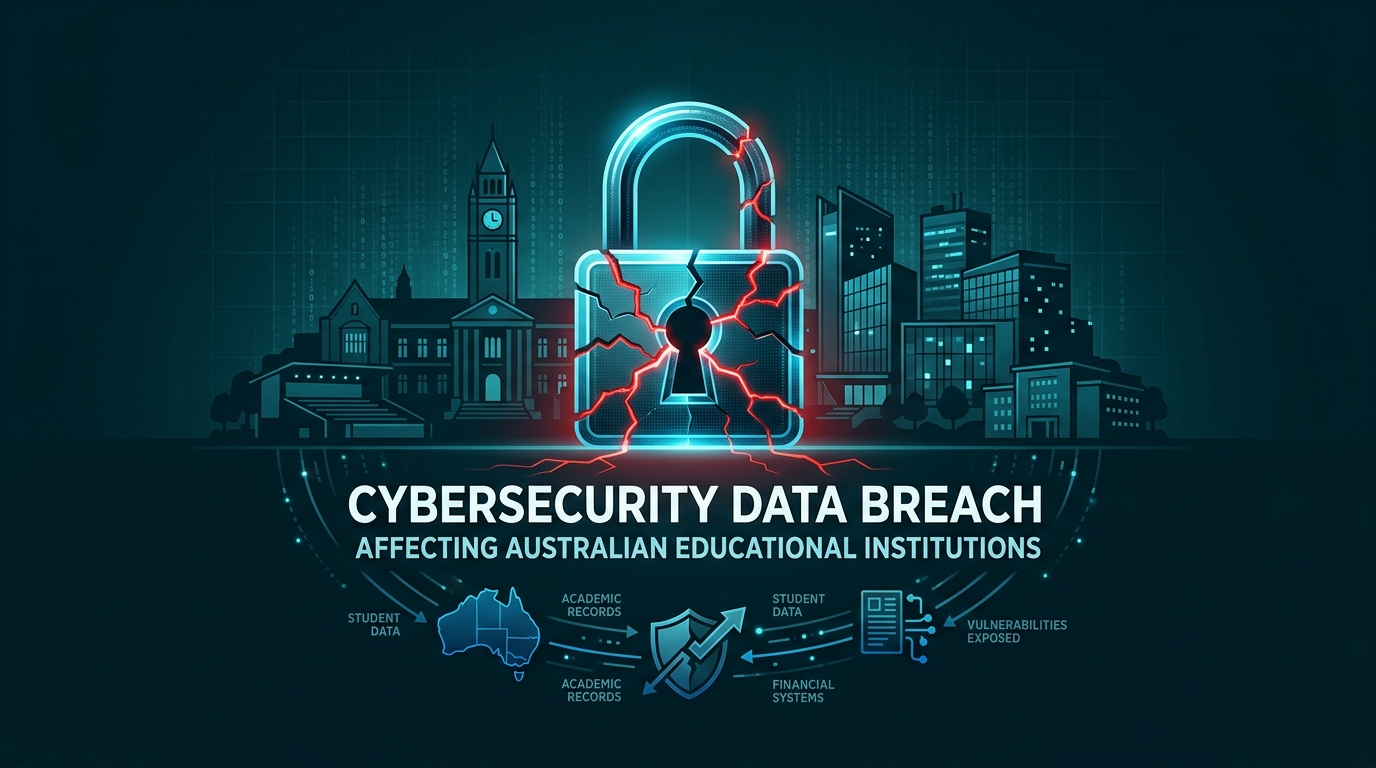
In early May 2026, one of the most significant cybersecurity incidents in Australian education came to light. The Instructure Canvas data breach affected some of Australia’s most prestigious universities, TAFEs, and school systems, potentially exposing the personal data of millions of students and staff members. For Australian businesses watching from the sidelines, this incident carries important lessons about third-party risk, vendor security, and the growing sophistication of criminal hacking groups.
This post covers what happened, how Instructure and Australian institutions responded, what affected individuals should do right now, and why organisations across every sector need to take this incident seriously.
What Happened: The Instructure Canvas Data Breach Explained
Canvas is one of the world’s most widely used learning management systems. Instructure, the US-based company behind Canvas, provides this platform to more than 9,000 institutions globally, including universities, TAFEs, secondary schools, and corporate training programmes. In Australia, Canvas has become deeply embedded in higher education, used daily by students and staff to submit assignments, send messages, access course content, and communicate with academic teams.
On approximately 1 May 2026, the criminal hacking group known as ShinyHunters successfully breached Instructure’s systems. ShinyHunters is a well-documented cybercriminal collective with a long and serious track record of targeting major organisations worldwide. The group is responsible for several high-profile data theft incidents in recent years and operates with a clear financial motive: steal data, demand a ransom, and threaten public release if the victim does not pay.
In this case, ShinyHunters reportedly acquired 3.65 terabytes of data from Instructure’s infrastructure. That data included names, email addresses, student ID numbers, and private messages exchanged through the Canvas platform. The volume of messages involved is reported to run into the billions, reflecting just how central Canvas has become to day-to-day communication in educational settings.
The group set a ransom deadline of 6 May 2026, threatening to publicly release the stolen data if Instructure did not meet their demands. The scale of the potential exposure is striking: Instructure confirmed that over 200 million people across its 9,000-plus institutions worldwide could be affected by the breach.
It is important to clarify what was and was not exposed. The data involved in the Instructure Canvas data breach includes:
- Full names
- Email addresses
- Student ID numbers
- Messages sent through the Canvas platform
The breach did not expose passwords, dates of birth, government-issued identification numbers, or financial information. While this limits some of the most immediate risks, the data that was exposed is still highly valuable to criminal actors and carries significant risks for those affected.
Australian Institutions Affected
The Australian impact of the Instructure Canvas data breach was substantial. Confirmed affected institutions include some of the country’s largest and most respected educational organisations:
- University of Sydney
- University of Melbourne
- RMIT University
- Western Sydney University
- Flinders University
- TasTAFE
- Queensland state schools using the QLearn system, which is powered by Canvas
These institutions collectively serve hundreds of thousands of students and staff members. The breadth of the impact highlights just how deeply Canvas is embedded in Australian education and why a breach at the vendor level can create such widespread downstream consequences.
How Instructure Responded
Instructure publicly disclosed the breach around 6 May 2026, coinciding with the ShinyHunters ransom deadline. The company stated that the incident had been “resolved” by that date and confirmed that Canvas remained fully operational throughout the response. Instructure began notifying affected institutions as part of its breach response obligations, and those institutions in turn began communicating with their student and staff communities.
In Australia, the response involved coordination at the federal level. The Australian Cyber Security Centre (ACSC) and the National Office of Cyber Security worked alongside Instructure and affected institutions to manage the situation. This federal involvement reflects the seriousness of the incident and the scale of the Australian impact.
Australian universities and TAFEs moved quickly to communicate with their communities. The focus for most institutions has been on transparency: letting students and staff know what happened, what data was involved, and what steps they should take. Institutions have also been monitoring for any signs of the stolen data appearing in public forums or on the dark web.
Instructure has not publicly confirmed whether any ransom payment was made to ShinyHunters. The company’s statement that the incident was “resolved” has been widely noted, though the specifics of how the resolution was achieved remain unclear. The lack of detail on this point is not unusual in breach disclosure situations, where legal and operational considerations often limit what companies can share publicly.
What Affected Students and Staff Should Do Now
If you are a student or staff member at one of the affected institutions, there are several concrete steps you should take as soon as possible.
Watch for Phishing Attempts
The data exposed in this breach, particularly names and email addresses, is precisely what cybercriminals use to craft convincing phishing emails. You may receive emails that appear to come from your university, from Canvas, from the ACSC, or from other trusted organisations. These emails may ask you to click a link, reset a password, or provide personal information. Always verify the sender’s email address carefully before taking any action. When in doubt, contact your institution’s IT helpdesk directly using contact details from the official website.
Review Your Canvas Messages
While Canvas messages are not the same as personal email, sensitive information may have been shared through the platform. Consider whether you have discussed personal circumstances with lecturers, shared medical or financial information, or exchanged anything that could be used against you. Being aware of what may be in criminal hands helps you stay alert to how that information might be misused.
Monitor Your Accounts for Suspicious Activity
Even though passwords were not exposed in this breach, stolen data from one incident is frequently combined with information from other breaches to create more complete profiles of individuals. Keep a close eye on your email accounts, university accounts, and any services linked to the email address you use with Canvas. If you notice unexpected login attempts or account changes, act immediately and contact your institution’s security team.
Report Anything Unusual to Your Institution
Your university or TAFE has a security team equipped to help in situations like this. If you receive a suspicious email, notice unusual account activity, or have any concerns arising from the breach, contact your institution’s IT helpdesk or cybersecurity team. Do not try to investigate suspicious activity on your own.
Stay Informed Through Official Channels
Follow communications from your institution and from Instructure directly. Avoid relying on social media speculation or unofficial sources, as misinformation spreads quickly after high-profile incidents. Official communications from your institution will be the most accurate and up-to-date source of guidance about next steps.
Why This Matters Beyond Education: Third-Party Risk for Australian Businesses
The Instructure Canvas data breach is not just an education sector story. For Australian businesses, particularly those in professional services, finance, healthcare, and legal services, this incident is a direct illustration of one of the most challenging cybersecurity problems organisations face today: third-party risk.
The Vendor Problem
Instructure is a vendor. Universities and schools did not build Canvas; they purchased access to it and entrusted it with the personal data of their staff and students. When Instructure’s systems were breached, every institution using Canvas became a victim by extension. Those institutions had no direct control over Instructure’s internal security practices, yet they now face the reputational, regulatory, and operational consequences of the breach.
This is the defining challenge of modern technology infrastructure. Most businesses today rely on dozens, and sometimes hundreds, of third-party software vendors and cloud service providers. Each of those vendors represents a potential attack surface. If any one of them is compromised, your organisation’s data may be at risk regardless of how robust your own internal security controls are.
The Canvas breach demonstrates that even large, well-resourced, globally recognised technology providers can be successfully targeted by sophisticated criminal groups. No vendor is immune, which means your organisation’s exposure to third-party risk is real and ongoing.
The Data Value Question
Criminal groups like ShinyHunters are not only interested in financial credentials. Names, email addresses, and private messages have significant value on criminal markets and in targeted attack campaigns. This data can be used for phishing, for social engineering, for identity verification bypass, and for building detailed profiles of individuals that can be exploited in future attacks.
For businesses in professional services, the nature of the data involved in day-to-day operations is often highly sensitive. Client communications, contract negotiations, financial discussions, and strategic plans may all flow through third-party platforms. A breach of any of those platforms could expose information that damages client relationships, creates legal liability, or undermines competitive advantage.
What Australian Businesses Should Ask Themselves
The Instructure Canvas data breach prompts some direct questions for any Australian organisation. Do you have a current, complete list of every vendor that has access to your organisation’s data? Have you reviewed those vendors’ security certifications and breach history? Do you have a formal process for assessing third-party risk before onboarding new software providers? Do you have contractual protections that require vendors to notify you promptly in the event of a security incident? If the answer to any of these questions is no, your organisation may be carrying more third-party risk than you realise.
General Cybersecurity Advice for Australian Organisations
The Instructure Canvas data breach is a timely prompt to review your own organisation’s cybersecurity posture. Here are practical steps that Australian businesses should prioritise now.
Conduct a Third-Party Vendor Audit
Start by building a complete picture of your vendor landscape. List every software platform, cloud service, and external provider that has access to your data. Review their security policies, certifications such as ISO 27001 or SOC 2, and their public track record on breach disclosure. Remove or restrict access for vendors that cannot demonstrate adequate security practices.
Implement Strict Access Controls
Apply the principle of least privilege to all vendor access. Vendors should only have access to the data and systems they strictly need to deliver their service. Regular reviews should confirm that access remains appropriate and that permissions are revoked when no longer needed. If a vendor is compromised, limiting their access limits the damage to your organisation.
Build a Breach Response Plan
A documented incident response plan is one of the most valuable cybersecurity investments any organisation can make. When a breach occurs, having a clear plan means your team knows immediately who to notify, how to assess the scope of the incident, and how to communicate with clients and regulators. Without a plan, the response is slower and the damage is greater.
Train Staff on Phishing and Social Engineering
The data exposed in breaches like this one is routinely used to target employees through sophisticated phishing campaigns. Regular security awareness training gives staff the skills to recognise suspicious communications and respond appropriately. Training should be ongoing, not a once-a-year checkbox exercise.
Monitor for Dark Web Exposure
Specialist tools and services can monitor the dark web for your organisation’s data and alert you if it appears in criminal marketplaces. This early warning capability can be the difference between containing an incident and losing control of the situation entirely.
Review Your Privacy Act Obligations
Australian businesses with an annual turnover above $3 million, and many smaller businesses in sensitive industries, have obligations under the Privacy Act 1988 to protect personal information and to notify affected individuals in the event of an eligible data breach. Understanding those obligations before an incident occurs is essential. Review your obligations and ensure your processes are in place to meet them.
Engage Professional Cybersecurity Support
Managing cybersecurity effectively in-house is increasingly difficult as the threat landscape grows more sophisticated. Working with a specialist provider of managed cybersecurity services gives your organisation access to dedicated expertise, continuous monitoring, and rapid incident response capability. For many Australian businesses, this is the most cost-effective way to maintain a strong security posture without building an entire internal security function.
What Otto IT Recommends
At Otto IT, we work with Australian professional services businesses to assess and strengthen their cybersecurity posture. In light of incidents like the Instructure Canvas data breach, we recommend that organisations take immediate action on three fronts.
First, audit your vendor relationships. Identify who has access to your data, assess their security practices, and ensure you have contractual protections in place. Second, test your incident response. Run a tabletop exercise to verify that your team knows exactly what to do when a breach is detected. Third, invest in continuous monitoring. Reactive security is no longer sufficient. Continuous monitoring of your environment and your supply chain is now a baseline requirement for any serious organisation.
The organisations that fare best after cybersecurity incidents are those that prepared before they became victims. Waiting for a breach to happen is not a strategy.
If you are unsure whether your business is adequately protected against third-party risk and evolving cyber threats, Otto IT can help. Our team works with Australian professional services businesses to identify vulnerabilities, strengthen security posture, and build resilience against incidents like this one. Get in touch with our team to start the conversation.
Frequently Asked Questions
What is the Instructure Canvas data breach?
The Instructure Canvas data breach refers to a cybersecurity incident in May 2026 in which the criminal hacking group ShinyHunters breached systems belonging to Instructure, the US company behind the Canvas learning management system. Over 200 million users across more than 9,000 institutions worldwide were potentially affected by the breach.
Which Australian institutions were affected by the Canvas breach?
Confirmed affected Australian institutions include the University of Sydney, University of Melbourne, RMIT University, Western Sydney University, Flinders University, TasTAFE, and Queensland state schools using the QLearn system.
What data was exposed in the Instructure Canvas breach?
The data exposed includes names, email addresses, student ID numbers, and private messages exchanged through the Canvas platform. Passwords, dates of birth, government-issued identification numbers, and financial information were not included in the exposed data.
Has the Instructure Canvas data breach been resolved?
Instructure stated that the incident was “resolved” by 6 May 2026 and confirmed that Canvas remained fully operational. The ACSC and the National Office of Cyber Security have been coordinating the Australian federal response.
What should I do if I think I was affected by the Canvas breach?
Watch for phishing emails, monitor your accounts for suspicious activity, review any sensitive information you may have shared through Canvas, and contact your institution’s IT helpdesk if you notice anything unusual. Follow official communications from your institution for the latest guidance.
What does this breach mean for Australian businesses?
The breach highlights the risks of third-party vendor relationships. Any organisation that relies on external software platforms to handle personal or sensitive data should review their vendor risk management processes, access controls, and incident response plans.
How can Otto IT help my business respond to risks like this?
Otto IT provides managed cybersecurity services to Australian professional services businesses, including vendor risk assessment, continuous monitoring, incident response planning, and staff security awareness training. Get in touch with our team to discuss how we can help your organisation build resilience against evolving cyber threats.
managed it support articles
Related Blog Articles
Discover more insights to optimise your business with the latest IT trends and best practices. Stay ahead of the curve by learning how to leverage cutting-edge technology for success. Explore expert advice and valuable guidance to navigate the evolving world of IT solutions