
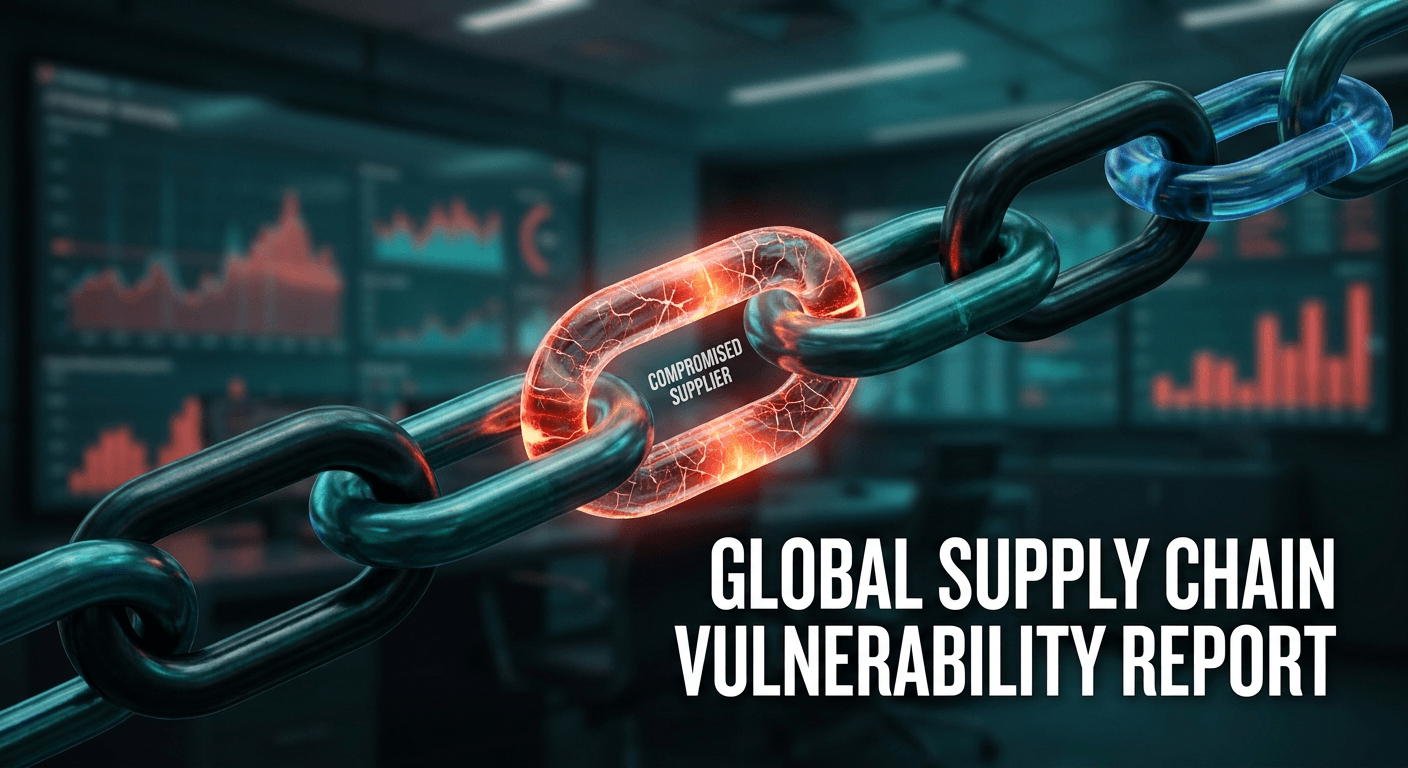
A supply chain cyber attack happens when a criminal compromises a trusted supplier, software vendor, or service provider to gain access to your business systems. Your own defences may be strong, but if a tool you rely on gets breached, attackers can use that trusted connection as a backdoor into your environment. This type of attack is growing rapidly in frequency, and Australian businesses of every size are being caught in the crossfire. You do not need to be the original target. You just need to be using the same tools or services as someone who was.
If you are new to the topic of cyber attacks, start with our guide to cyber attacks in Australia before reading on. This post builds on that foundation and focuses on one of the most difficult threat categories to defend against.
Why Supply Chain Attacks Are So Dangerous
Most business owners focus on securing their own systems. They train their team, update their software, and put firewalls in place. That is exactly the right approach. But supply chain attacks exploit a gap that most businesses have not considered: the security of the people and tools they trust.
When a software vendor is compromised, every organisation using that software can be affected. When a managed service provider is breached, every client of that MSP becomes a potential target. You did everything right. Your supplier did not. And now your business is at risk through no fault of your own.
This is what makes supply chain attacks particularly difficult to defend against. The entry point is not your own network. The entry point is a trusted relationship that your security tools have no reason to flag as suspicious. Malicious code arrives via a legitimate software update. Attackers move through systems using credentials your provider already holds. By the time the compromise is detected, significant damage may already be done.
Real-World Examples That Changed the Cybersecurity Landscape
These are not hypothetical scenarios. Supply chain attacks have affected thousands of organisations globally, including many with Australian operations. The following incidents are extensively documented in public reporting.
SolarWinds (2020)
SolarWinds produces IT management tools used by governments, large corporations, and IT providers worldwide. In 2020, attackers inserted malicious code into a routine software update for the SolarWinds Orion platform. Organisations that installed that update unknowingly gave attackers a hidden presence in their networks. The incident affected tens of thousands of customers globally and is widely regarded as one of the most significant cyber espionage campaigns ever documented. The attack went undetected for months.
MOVEit (2023)
MOVEit is a file transfer tool used by organisations to move sensitive data between systems. In 2023, attackers exploited a vulnerability in the MOVEit software before a patch was available. Hundreds of organisations were affected, including companies with Australian operations. Sensitive files were stolen from businesses that had done nothing wrong beyond using a widely trusted and respected product.
3CX (2023)
3CX is a popular business phone system used by thousands of companies around the world. In 2023, attackers compromised the 3CX software build process and distributed a malicious version of the desktop application through official channels. Users who downloaded what they believed was a legitimate update were exposed to malware. This attack demonstrated that even the software installation process itself can be weaponised through a trusted vendor.
Each of these incidents followed the same pattern. The attackers did not break in through the front door. They used a trusted supplier as their entry point, and the organisations affected had no way of knowing until significant damage had already occurred.
How This Affects Australian SMBs
You might be thinking that these examples involve large multinational software companies and government agencies. Your business is nothing like that scale. But the risk to Australian small and medium businesses is very real and very direct.
When a payroll software provider is breached, every business using that software may have employee data exposed. When a managed service provider is compromised, every business they manage becomes a potential target. When a cloud accounting tool is exploited, financial records across thousands of businesses can be put at risk simultaneously.
You do not need to be the primary target. You just need to be using the same tools or services as someone who was. Australian businesses are increasingly connected to global software supply chains, which means global threats are also local risks. A small professional services firm in Melbourne can be caught in a breach originating from a software vendor headquartered overseas.
The businesses most at risk are often those that assume their size protects them. Attackers exploiting a supply chain vulnerability are not selecting targets individually. They are hitting every organisation that uses a particular piece of software or service, regardless of size or industry.
Otto IT’s managed cybersecurity services are built with supply chain risk in mind, helping you assess and monitor the security posture of the tools and providers your business depends on.
What to Look for in Your IT Supply Chain
Your supply chain is not just physical goods. In a modern business, your IT supply chain includes every piece of software, every service provider, and every platform your team depends on to operate.
Software vendors
Every application your team uses is part of your supply chain. This includes productivity tools, accounting platforms, project management software, communication tools, and anything that connects to your systems or holds your data. Each vendor has its own security practices, and a weakness in any one of them can become a weakness in your environment.
Managed service providers
If you outsource your IT management, your MSP has significant access to your environment. Their security posture directly affects yours. An MSP that is compromised can give attackers privileged access to every client they manage. This makes your choice of IT provider one of the most important security decisions your business makes.
Cloud providers and SaaS platforms
Services like cloud storage, customer relationship management systems, and communication platforms are common targets. Data handling practices and access permission controls matter significantly here.
Payroll and HR systems
These systems hold sensitive employee and financial data and often have integrations across your business. A breach in this area can expose personal information and create significant compliance and legal exposure.
Third-party integrations
Any tool that connects to your core systems via an API or integration is a potential entry point. Many businesses are unaware of how many third-party connections exist within their environment. Mapping and reviewing these connections is an important first step.
Questions to Ask Your IT Provider
If you outsource your IT management, your provider’s security practices become part of your own risk profile. A good IT partner should be able to answer these questions clearly and confidently.
- Do you follow a documented security framework or recognised standard such as ISO 27001 or the Essential Eight?
- How do you manage software updates and patches across your infrastructure and client environments?
- What access controls do you have in place for staff who access client systems?
- How do you monitor for signs of compromise within your own infrastructure?
- Do you conduct regular third-party security assessments or penetration testing?
- What is your incident response process if your own systems are breached?
- How and how quickly do you communicate with clients in the event of a security incident?
- Do you carry cyber liability insurance and what does it cover?
A provider that cannot answer these questions clearly is worth examining more closely. Vague or defensive responses are a signal that their security posture may not be as strong as your business needs it to be.
How to Reduce Your Exposure
You cannot control what happens inside your suppliers’ systems. But you can control how connected they are to yours, and how quickly your business can detect and respond when something goes wrong.
Vendor due diligence before onboarding
Before bringing on a new software tool or service provider, ask about their security practices. Look for evidence of compliance with recognised standards. Check whether they have had any publicly reported breaches and how they handled the response. A vendor with a strong and transparent approach to security is preferable to one that avoids the conversation.
Least privilege access
Give every user and every system only the access they need to do their job and nothing more. If a supplier’s tool is compromised, limited permissions mean limited damage. Review access permissions on a regular schedule and remove access that is no longer required.
Network segmentation
Keep different parts of your network separated where this is possible. If an attacker gains entry through a compromised supplier, segmentation limits how far they can move through your environment. This can be the difference between a contained incident and a business-wide breach.
Timely software updates
Software updates frequently contain security patches that close vulnerabilities before attackers can exploit them. Establish a clear process for applying updates promptly across all your systems, and do not delay patches without a documented reason.
Monitor for unusual activity
Unusual login locations, unexpected data transfers, and unexplained changes to user permissions can all be early signs of a supply chain compromise. Good monitoring and alerting helps your team respond before damage escalates into a full breach.
What the Australian Government Is Doing About Supply Chain Risk
The Australian Cyber Security Centre (ACSC) has published guidance on supply chain risk management as part of its broader effort to strengthen Australia’s cyber resilience. The ACSC recommends that organisations assess the security practices of their suppliers, include security requirements in procurement and contracting processes, and have documented plans in place to respond to supply chain incidents.
The Australian government’s Protective Security Policy Framework also addresses supply chain risk for government entities, and many of those principles apply equally to private sector businesses. The ACSC’s Essential Eight framework, while not supply-chain specific, provides a solid foundation of controls that significantly reduce the impact of any type of compromise, including those that arrive through a trusted vendor.
Staying informed about ACSC guidance is one of the most practical steps any Australian business owner can take. The ACSC publishes alerts when significant vulnerabilities are identified, including those affecting widely used software products.
How AI and Copilot Can Help
Managing supply chain risk involves significant documentation, process, and ongoing review. Microsoft Copilot can help your team work more efficiently through this process without needing to build everything from scratch.
Copilot can help you draft a vendor security questionnaire to send to your suppliers. It can help you summarise and compare the responses you receive, identify gaps in vendor security practices, and create documentation for your own IT supply chain inventory. If you are not sure where to begin, Copilot gives you a structured starting point and helps you move from a blank page to a working process much faster.
This is one practical example of how AI tools can genuinely support your cybersecurity posture. The technology handles the time-consuming documentation work so your team can focus on reviewing the results and making decisions.
Frequently Asked Questions
What is a supply chain cyber attack?
A supply chain cyber attack is when an attacker compromises a supplier, software vendor, or service provider that your business trusts, then uses that trusted relationship to gain access to your systems or data. Your own security may be strong, but the attacker enters through a third party you rely on rather than attacking you directly.
Can a small Australian business really be affected by a supply chain attack?
Yes, absolutely. Small businesses use the same software platforms and service providers as large ones. If a widely used payroll tool, cloud platform, or IT provider is compromised, every business using that service is potentially at risk regardless of their own size or sector.
What should I do if I think my business has been affected by a supply chain breach?
Disconnect affected systems from your network where you safely can, contact your IT provider immediately, preserve any logs or evidence of the incident, and report it to the ACSC through their ReportCyber portal at cyber.gov.au. Acting quickly limits the damage significantly.
How do I know if my IT provider is secure?
Ask them directly and assess the quality of their answers. A reputable provider should be able to explain their security framework, access controls, monitoring practices, and incident response processes without hesitation. If the answers are vague or the questions are deflected, that is a signal worth taking seriously.
What is the first step to protecting my business from supply chain risks?
Start by mapping your IT supply chain. List every software tool, service provider, and system integration your business depends on to operate. From there you can assess which connections carry the most access and data exposure, and prioritise your due diligence efforts accordingly.
Is supply chain risk covered by cyber insurance?
Coverage varies significantly between policies. Some cyber insurance policies cover losses arising from third-party vendor breaches, while others exclude them or apply sublimits. Review your policy carefully and speak with your broker to understand exactly what your cover includes.
Supply chain attacks are one of the harder cybersecurity risks to get visibility over, because the exposure sits outside your own walls. But understanding the risk is the first step to managing it.
Ready to understand your business’s exposure? Book a security conversation with the Otto IT team and we will help you identify where your supply chain risks are and what to do about them.
This is post 8 of 12 in our Cybersecurity for Business series. Each week we cover a different threat, tactic, or protection strategy to help Australian business owners build a stronger security foundation.
managed it support articles
Related Blog Articles
Discover more insights to optimise your business with the latest IT trends and best practices. Stay ahead of the curve by learning how to leverage cutting-edge technology for success. Explore expert advice and valuable guidance to navigate the evolving world of IT solutions