
Editor’s Note (updated June 2026): The automation landscape has shifted considerably since this was published, with Microsoft Copilot now embedded across the full Microsoft 365 suite and widely available to Australian SMBs. Many of the manual tasks described below can now be handled by Copilot agents with minimal setup, compressing hours of work into minutes. We’ve kept the original recommendations intact as strong starting points, but pairing them with Copilot will get you to the same destination significantly faster.
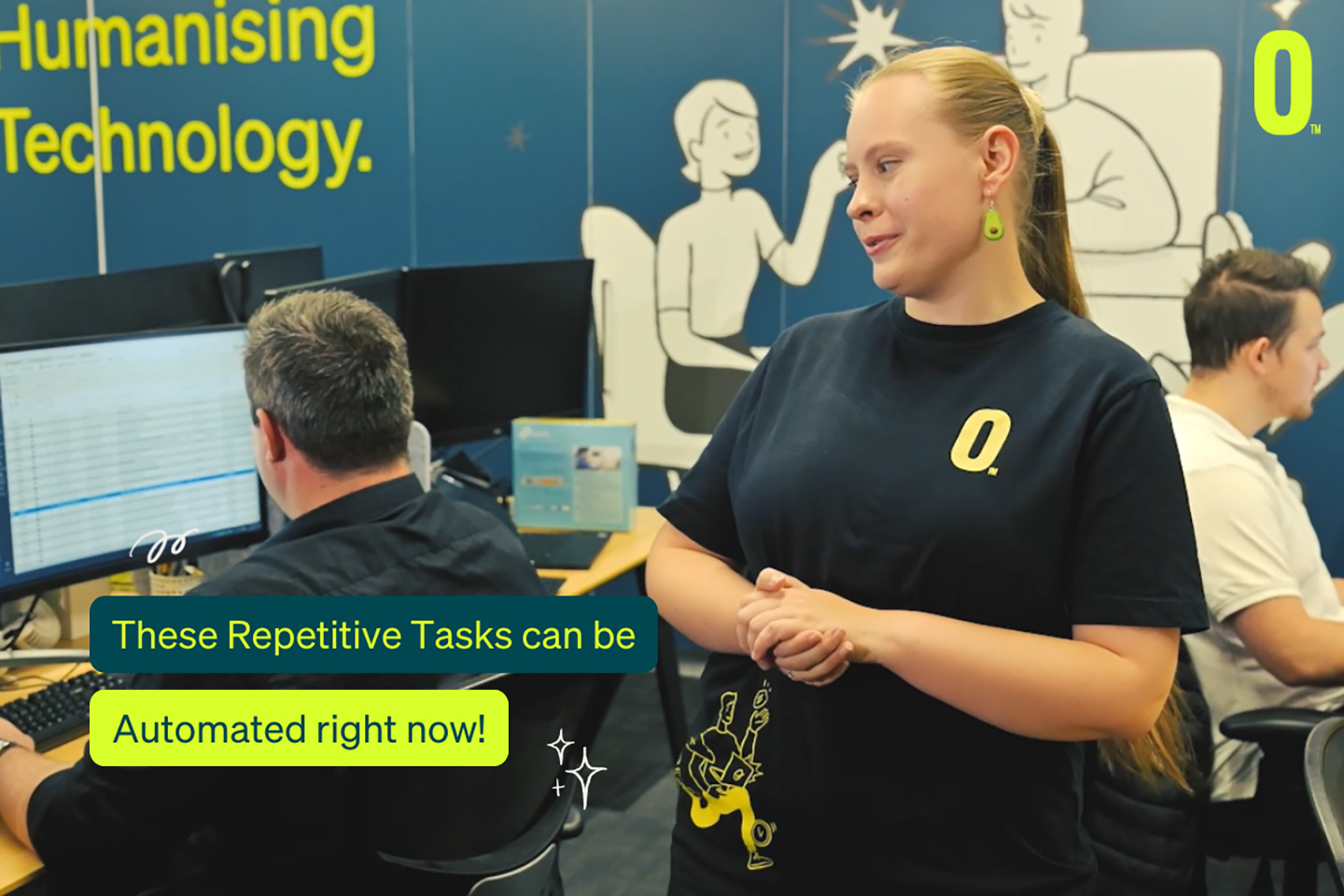
The relentless tide of data and ever-evolving technology landscapes leave businesses across all industries struggling to keep pace. Repetitive, rule-based tasks consume valuable time and resources, diverting focus from strategic initiatives. Fortunately, Artificial Intelligence (AI) offers a powerful solution for businesses of ALL sizes, automating these mundane processes and freeing IT professionals for more critical work. This article explores the most common repetitive IT tasks across various sectors that can be automated with AI tools, empowering businesses to streamline operations and boost productivity. And importantly, Aussie employees want it! 
Industry-Specific Applications of AI in IT Automation
- Law Firms and Accounting Firms:
- Document Review and Classification: AI can analyse legal and financial documents, extracting key information, highlighting discrepancies, and classifying documents based on content. This streamlines document review processes and reduces human error.
- E-discovery: AI can sift through massive datasets to identify relevant documents for litigation or investigations, saving time and resources compared to manual keyword searches.
- Client Intake and Onboarding: Chatbots powered by AI can answer client queries, pre-qualify leads, and automate repetitive onboarding tasks, freeing human resources for more complex client interactions.
- Manufacturing:
- Predictive Maintenance: AI can analyse sensor data from equipment to predict maintenance needs, preventing costly breakdowns and production delays.
- Quality Control: AI-powered image recognition can automate quality control processes, identifying defects in products with high accuracy and reducing the need for manual inspection.
- Inventory Management: AI can analyse sales data and predict demand fluctuations, enabling automated inventory management and optimising stock levels.
- Education:
- Grading and Assessment: AI can automatically grade multiple-choice questions, essays, and code, freeing educators from tedious tasks and allowing them to focus on personalised feedback.
- Adaptive Learning Platforms: AI-powered platforms can personalise learning experiences by tailoring content and difficulty levels to individual student needs, leading to improved learning outcomes.
- Administrative Tasks: Chatbots can handle routine student inquiries and requests, freeing up staff for more complex administrative tasks.
- E-commerce and Retail:
- Product Recommendation Engines: AI can analyse customer purchase history and browsing behaviour to recommend relevant products, leading to increased customer satisfaction and sales.
- Customer Service Chatbots: AI-powered chatbots can answer customer inquiries 24/7, resolve basic issues, and direct complex questions to human agents.
- Price Optimisation: AI can analyse market trends and competitor pricing to automatically adjust product pricing, maximising profitability.
- Real Estate Agencies:
- Lead Generation and Qualification: Chatbots can engage with potential clients online, gather information, and qualify leads, saving time for real estate agents.
- Property Matching: AI can analyse client preferences and recommend properties that meet their needs, accelerating the home search process.
- Market Analysis and Reporting: AI can analyse real estate data to identify trends, generate automated reports, and provide valuable insights to real estate agents.
- Public Sector:
- Data Entry and Form Processing: AI can automate data entry from citizen forms, applications, and surveys, improving data accuracy and processing speed.
- Freedom of Information (FOIA) Requests: AI can analyse FOIA requests and identify relevant documents, reducing the time and resources required for manual processing.
- Fraud Detection and Prevention: AI can analyse financial transactions to detect anomalies and identify potentially fraudulent activity.
- Managed Service Providers (MSPs):
- Patch Management and Software Updates: AI can automate patch management and software updates across client networks, ensuring security vulnerabilities are addressed promptly.
- Service Desk Automation: Chatbots can handle routine inquiries from clients, freeing up support staff to focus on complex issues.
- Network Monitoring and Security: AI can continuously monitor networks for anomalies and security threats, allowing for faster incident response.
Benefits of AI-driven IT Automation:
- Increased Efficiency: Automating repetitive tasks frees IT staff from mundane work, allowing them to focus on strategic initiatives and innovation.
- Reduced Costs: Automating tasks can lead to significant cost savings by reducing manpower required for routine IT operations.
- Improved Accuracy: AI helps eliminate human error in tasks like data entry and document processing, leading to more reliable results.
- Scalability: AI-powered automation can handle increased workloads without requiring additional staff, allowing businesses to scale efficiently.
- Enhanced Security: AI can automate security tasks like threat detection and vulnerability management, improving the overall security posture of an organisation.
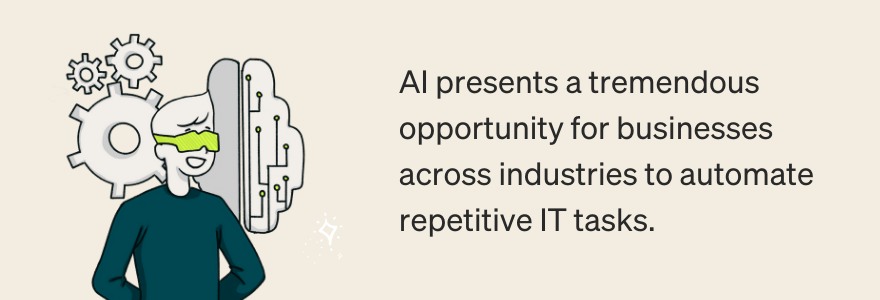
AI presents a tremendous opportunity for businesses across industries to automate repetitive IT tasks. By embracing AI, organisations can boost productivity, streamline operations, and free up valuable resources for strategic growth. As AI technology continues to evolve the possibilities for automating even more complex IT tasks will continue to expand. However, it’s important to acknowledge that AI is not a silver bullet. Here are some key considerations for successful AI implementation:
- Data Quality: AI algorithms rely on clean, high-quality data to function effectively. Investing in data governance and data quality initiatives is crucial for optimal AI performance.
- Human-in-the-Loop Approach: AI should not replace human expertise entirely. Rather, it should augment human capabilities. Focus on using AI for tasks best suited for automation, while reserving human judgment for complex decision-making.
- Change Management: Transitioning to AI-powered automation may require changes in workflow and employee roles. Effective change management strategies are essential to ensure user adoption and address potential concerns.
- Ethical Considerations: AI development and deployment raise ethical concerns around bias and transparency. Ensure you have strong AI governance in place, that your AI tools are developed and used ethically, with fairness and transparency in mind.
By carefully considering these factors, businesses can harness the power of AI to automate repetitive IT tasks, unlocking a new era of efficiency, productivity, and innovation across all sectors. Taking the First Step Ready to explore AI-powered IT automation for your business? Here are some initial steps:
- Identify Repetitive Tasks: Analyse your IT processes to pinpoint repetitive tasks that are well-defined and rule-based. These are prime candidates for automation with AI.
- Evaluate AI Solutions: Research and evaluate AI solutions available in the market that align with your specific needs and budget. Several industry-specific AI solutions are readily available.
- Start Small & Scale: Begin by automating a single task or process to gain experience and assess the impact of AI on your operations. As you gain confidence, you can progressively scale your AI automation efforts.
By taking a proactive approach and leveraging AI strategically, businesses can transform their IT departments from cost centres to innovation hubs, driving a competitive edge in the ever-evolving digital landscape.  Find the Right MSP to Drive Your AI Strategy! Our ISO27001 certified Managed Service Provider (MSP) in Melbourne is here to guide you through the dynamic landscape of Artificial Intelligence (AI). We understand that small and medium-sized businesses across Australia face the daunting task of sifting through a multitude of products, services, and providers, and that’s why we’re committed to simplifying this journey. With our expertise, we aim to assist every industry in making strategic tech investments. As we enter 2023, Otto is dedicated to putting technology into action by designing and leading your AI projects, garnering stakeholder and employee support, and aligning optimal solutions with your goals. Whether supplementing your tech department, providing vCIO services or IT consulting, implementing world-class cybersecurity, or implementing hybrid working solutions, Otto’s ISO27001 certification ensures a secure and effective partnership, offering tailored roadmaps for your budget and sector. Let us empower your business to embrace and thrive through the AI revolution and beyond.
managed it support articles
Related Blog Articles
Discover more insights to optimise your business with the latest IT trends and best practices. Stay ahead of the curve by learning how to leverage cutting-edge technology for success. Explore expert advice and valuable guidance to navigate the evolving world of IT solutions